VR Resources Limited (TSXV: VRR) (OTCQB: VRRCF) could be onto something big at its New Boston project in Nevada. On August 26, 2026, shares of VR Resources surged 233% on volume of nearly 15 million shares after the junior explorer announced geochemical results from drill hole NB26-003 in the western part of the New Boston mineral system. This includes the Jeep Mine area of the property.
Assays of note included 0.77% copper equivalent over 317 metres (m) starting at surface, which contained economic-grade molybdenum and tungsten. VR said data from the drill hole shows nearly continuous mineralization, containing molybdenum, copper, tungsten, silver and zinc in “complex and intense polyphase veining” that is continuous across 881m of drill core.
It’s important to note that NB26-003 was ended at 881m because the hole was unstable. The company, though, said the interval beginning at 610m showed the strengthening of copper mineralization, with a 31m section of core returning 0.98% copper equivalent.
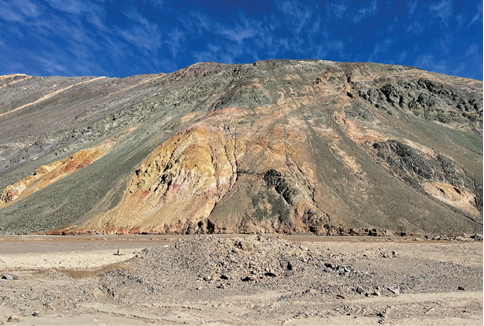
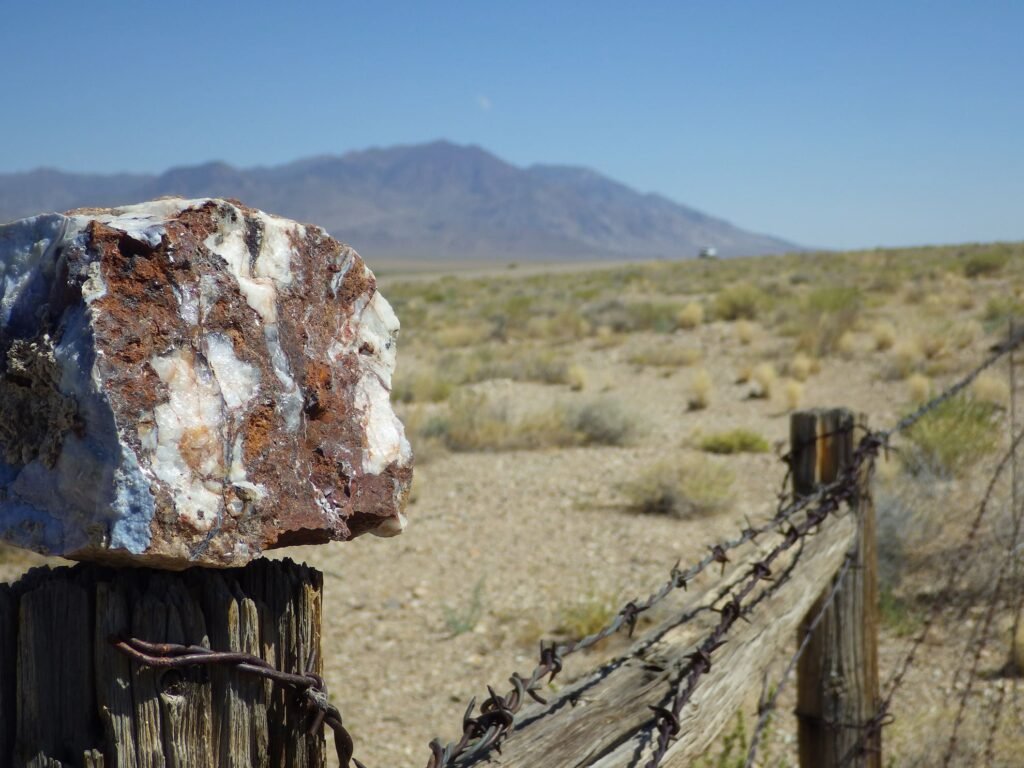
New Boston is situated in a cluster of porphyry deposits in the western U.S. with polymetallic signatures characterized by tungsten, copper, molybdenum, and silver, according to the company. VR management believes New Boston has scale, containing sheeted dykes and sheeted veins with tungsten, molybdenum, copper, and silver exposed on surface over an east-west strike length of three to four kilometres.
Interestingly, the New Boston property was owned by ConocoPhillips more than 50 years ago. The oil giant did some exploration work there in the 1960s and 1970s but abandoned the project following a collapse in global commodities prices in the early 1980s.
Before throwing in the towel, though, Conoco delineated a 3.14-billion-ton resource model for New Boston, based on mapping, sampling, and 13 drill holes. The model was based on the mineralized sheeted-vein system exposed at surface. It covered a strike length of about 2.1 kilometres but excluded a central porphyry that the company inferred but never located or drill tested.
Fast forward to 2026. VR Resources has access to geophysical technologies that weren’t available in the 1970s to identify targets for sulfide mineralization in a central porphyry, which could be the source for the sheeted veins exposed at surface.
In addition, VR is using ICP-MS trace element geochemistry, which measures even the smallest amounts of elements in rocks. This is a game changer in defining the grade potential of the polymetallic system for molybdenum, tungsten, copper, and silver.
Combined with commodities prices that are significantly higher today compared with the early 1980s and investors can probably get an idea as to why VR Resources management is so excited by New Boston.
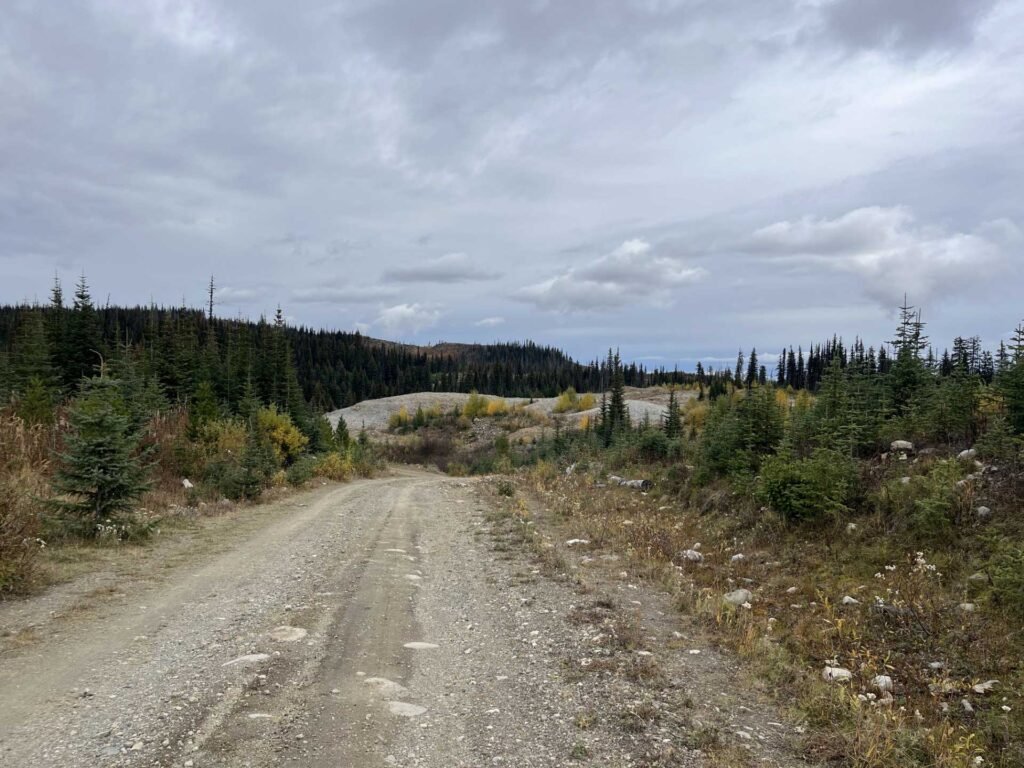
The company recently closed a C$7.5 million equity financing at C$0.40 per unit, which has been earmarked for more drilling at New Boston this fall. VR, however, will likely need to spend between US$4 million and US$5 million to drill this project to get a better idea as to what’s really there. The company benefits from the fact that all its drill sites have direct road access.
VR Resources has a market cap of about C$50 million, which includes the recent equity financing in its share count and presumes the previous outstanding warrants with strike prices ranging from $0.16 to $0.30 per share are exercised. Thus, this appears to be a promising speculation still in its early days.
Shares of VR Resources closed at $0.55 on September 21, 2026.
Investor2M posts and articles are for informational purposes only, and are not a recommendation, solicitation, or research report relating to any investment strategy, security, or digital asset. All investments involve risk including the loss of principal and past performance does not guarantee future results.
Any information contained in this commentary does not purport to be a complete description of the securities, markets, or developments referred to in this material. The information has been obtained from sources considered to be reliable, but we do not guarantee that the foregoing material is accurate or complete. There is no guarantee that any statements or opinions provided herein will prove to be correct.